
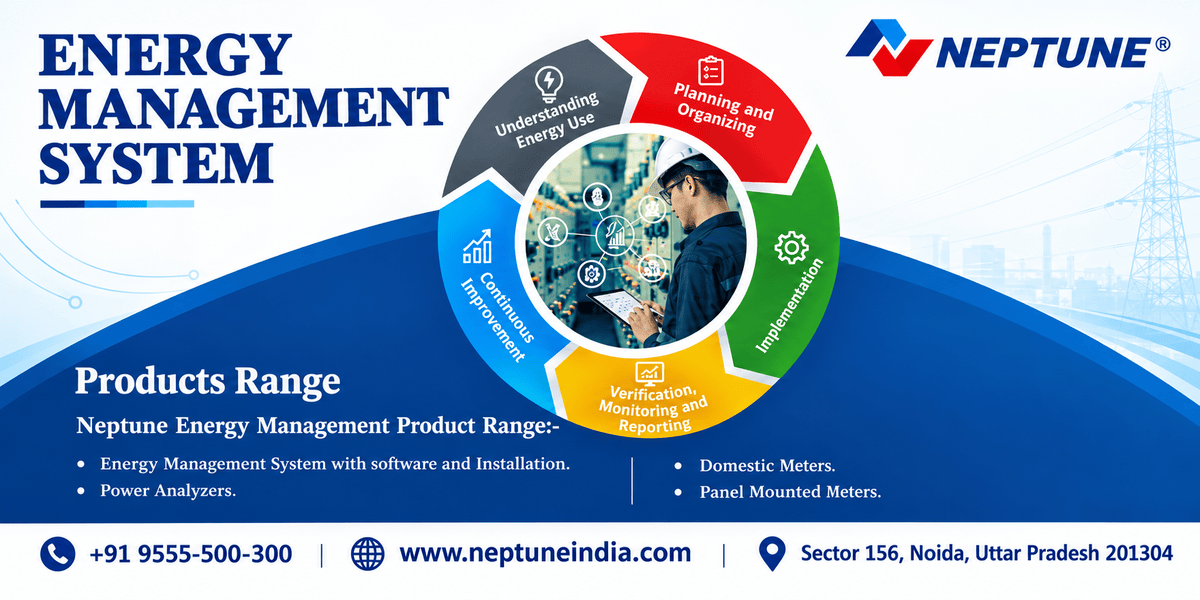
Smart Energy Management Solution for Industries
An Energy Management System helps industries monitor energy consumption, reduce operating costs, improve efficiency, and identify energy-saving opportunities. With rising electricity prices, increasing regulatory requirements, and growing environmental concerns, effective energy management has become essential for industrial organisations. Neptune India provides energy management technologies that help businesses analyse energy usage, improve operational performance, and make informed decisions about energy efficiency.
1. What Is an Energy Management System?
Energy management is the process of monitoring, controlling, and optimising energy consumption within an organisation. An Energy Management System helps businesses understand how electricity and other energy resources are used across their facilities.
By analysing energy flows and identifying unnecessary consumption, companies can implement energy-saving measures, reduce wastage, and improve operational performance.
Energy expenses are a significant part of industrial operating costs, alongside labour and raw materials. Fluctuating energy prices can put additional pressure on business profitability. An effective Energy Management System helps industries track consumption patterns, identify inefficiencies, and manage energy costs more effectively.
2. Benefits of an Energy Management System
Implementing an Energy Management System offers several benefits, from reducing operating expenses to improving sustainability. By collecting and analysing energy data, businesses can make better decisions about energy usage.
Reduced Energy Costs with an Energy Management System
Energy monitoring helps organisations identify equipment and processes that consume excessive electricity. By addressing these inefficiencies, businesses can reduce unnecessary energy consumption and improve cost control.
Neptune India’s energy management technology can help customers identify potential savings. Actual results depend on the facility, existing equipment, consumption patterns, and the measures implemented.
Improved Industrial Energy Efficiency
An energy monitoring solution provides visibility into energy consumption across different machines, production lines, and departments. This information helps businesses identify inefficient processes and prioritise improvements.
Better Regulatory Compliance Through Energy Monitoring
Industrial organisations may need to meet applicable energy-efficiency requirements, reporting obligations, and audit standards. An energy monitoring solution helps maintain energy consumption records and provides useful data for audits and performance assessments.
Environmental Sustainability and Energy Management
Reducing energy consumption can help lower the environmental impact associated with energy use. Better monitoring also supports sustainability initiatives and helps businesses measure progress towards their environmental goals.
Data-Driven Decisions with an Energy Management System
Energy dashboards, reports, and performance indicators provide actionable insights into consumption trends. Facility managers can use these insights to plan improvements, monitor results, and allocate resources more effectively.
3. Energy Management System, Energy Audits, and ISO 50001
Energy audits help organisations understand their current energy performance and identify opportunities for improvement. Depending on applicable requirements, an energy audit may include:
- Determining the organisation’s existing energy consumption.
- Estimating potential energy and cost savings.
- Identifying areas with high energy consumption.
- Recommending immediate improvements, including low-cost measures.
- Establishing an energy performance benchmark.
- Identifying equipment or processes that require detailed investigation.
- Reviewing available energy data and measurement records.
- Evaluating energy performance against defined objectives.
The system provides visibility into energy consumption by making consumption data easier to access, analyse, and compare.
How an Energy Management System Supports ISO 50001
ISO 50001 is an international standard that provides a framework for establishing, implementing, maintaining, and continually improving an energy management system. It helps organisations develop a structured approach to energy performance improvement.
An Energy monitoring solution can support ISO 50001-related activities by providing consumption data, performance indicators, and monitoring capabilities. However, using energy management software alone does not guarantee ISO 50001 certification. Certification depends on the organisation meeting the applicable standard requirements and completing the relevant assessment process.
4. How Does an Energy Management System Work?
An Energy Management System combines hardware, software, monitoring devices, and analytical tools to measure and optimise energy consumption.
Depending on the solution, the hardware may include energy meters, sensors, communication devices, and data acquisition equipment. The software collects and processes this information, presenting it through a central dashboard.
A modern Energy Management System can help businesses:
- Monitor energy consumption in real time or at defined intervals.
- Compare energy usage across departments and production processes.
- Analyse historical consumption patterns.
- Identify unusual energy usage and potential inefficiencies.
- Generate reports and energy performance indicators.
- Track the effectiveness of energy-saving initiatives.
With these capabilities, industrial organisations can move from reactive energy monitoring towards proactive energy management.
5. What Is the Cost of an Energy Management System?
The cost of an Energy Management System depends on several factors, including the size of the facility, the number of monitoring points, the type of energy meters required, communication infrastructure, software features, and integration requirements.
A small facility may need a relatively simple monitoring setup, while a large industrial plant may require multiple meters, advanced analytics, dashboards, and integration with existing production or enterprise systems.
For an accurate estimate, businesses should assess their current energy infrastructure, monitoring objectives, and reporting requirements before selecting a solution.
6. Is an Energy Management System Mandatory for Industries?
Energy management requirements vary according to the country, industry, organisation size, and applicable regulations. Certain businesses may be subject to specific energy audits, reporting obligations, or efficiency requirements.
An Energy Management System can help organisations organise energy data and monitor performance more effectively. Businesses should verify the requirements that apply to their operations rather than assume that every organisation has the same legal obligations.
Neptune India offers energy management solutions supported by energy monitoring technology and consultation. Businesses can also explore energy meters and metering systems to understand available monitoring options.
7. Key Features of Neptune India’s Energy Management System
Neptune India’s energy management solution is designed to help industrial businesses monitor consumption, analyse performance, and identify opportunities to improve energy efficiency.
Depending on the configuration and integration requirements, key capabilities may include the following.
ISO 50001-Oriented Energy Monitoring
Energy monitoring and reporting features can support an organisation’s energy management processes and its work towards applicable ISO 50001 requirements.
Integration with Production Systems
Integration with production equipment and operational systems can help businesses understand energy consumption alongside manufacturing activities.
Neptune Energy Suite Configuration
Configuration and data integration capabilities can help simplify deployment and align energy monitoring with operational requirements.
Cost Centre Accounting and ERP Integration
Where supported and configured, cost-centre accounting and ERP integration can help organisations allocate energy costs and review consumption across departments or business units.
Energy Efficiency Controlling and Project Planning
Energy performance data helps businesses monitor efficiency initiatives, evaluate improvements, and plan future energy-saving projects.
Flexible Dashboards and Reporting
Reports, dashboard widgets, statistics, and management key performance indicators can help different teams review energy consumption according to their needs.
Monitoring Energy Conversion Processes
Monitoring applications may include cooling plants, heat exchangers, pumps, and compressors. Analysing their energy usage can help identify operational inefficiencies and opportunities for optimisation.
Energy Baseline and Performance Evaluation
An energy baseline provides a reference point for evaluating changes in energy performance. Relevant methods, including those described in ISO 50006, can support the development and use of energy performance indicators and baselines.
Conclusion: Choose the Right Energy Management System
An Energy Management System enables industries to understand energy consumption, improve operational efficiency, manage costs, and support sustainability objectives. By combining energy meters, monitoring equipment, software dashboards, and data analysis, organisations can identify inefficiencies and make better-informed decisions.
Neptune India helps industrial businesses explore energy monitoring and management technologies suited to their operational requirements. Choosing the right solution can provide greater visibility into energy usage and create a structured foundation for continuous energy performance improvement.
Looking to improve energy monitoring at your facility? Explore Neptune India’s Energy Monitoring Solutions to learn more about available solutions.
